Understanding the Condition
The thyroid is a small butterfly-shaped gland in the front of the neck that produces hormones regulating metabolism, energy levels, heart rate, and body temperature.
Thyroid nodules are very common. Most are benign and cause no symptoms, while some grow large enough to cause local complaints, affect hormone production, or require further investigation to exclude malignancy.
What Are Thyroid Nodules?
A thyroid nodule is a localised growth of cells within the thyroid gland. Nodules may be solid, cystic, or a combination of both.
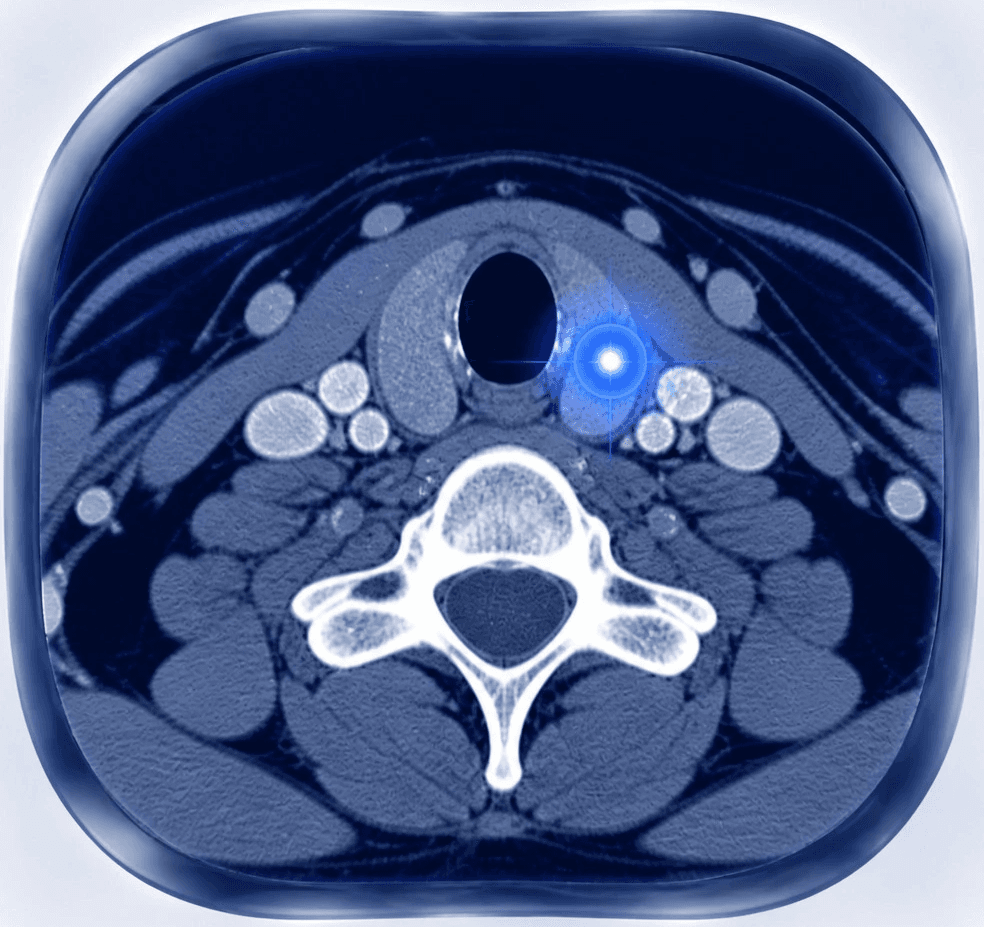
Nodules are often discovered incidentally during neck ultrasound, CT, or MRI examinations performed for unrelated reasons. The large majority are benign.
Benign Thyroid Nodules
Most thyroid nodules are non-cancerous. Common types include:
Colloid and hyperplastic nodules
Thyroid cysts
Follicular adenomas
Nodules within a multinodular goitre
Benign nodules may still require treatment when they grow, cause visible swelling of the neck, or produce local symptoms.
Autonomously Functioning (Toxic) Nodules
Some nodules produce thyroid hormone independently of normal regulation. These are described as autonomously functioning or toxic nodules and may cause hyperthyroidism.
In selected patients, targeted treatment of the overactive nodule can restore normal hormone levels while preserving the rest of the gland.
Malignant Thyroid Tumour
A minority of thyroid nodules are malignant. The most common form is papillary thyroid carcinoma, which usually grows slowly and has a favourable prognosis.
Other types include follicular, medullary, and rarely anaplastic thyroid carcinoma. Suspected malignancy is always assessed by a multidisciplinary team and managed according to established guidelines.
Symptoms of Thyroid Nodules
Many thyroid nodules cause no symptoms at all. When symptoms occur, they may include:
A visible or palpable lump in the neck
A feeling of pressure or tightness in the throat
Discomfort when swallowing
Changes in the voice or hoarseness
Shortness of breath when lying down, if the nodule is large
Palpitations, weight loss, or heat intolerance in overactive nodules
Fatigue and cold intolerance in underactive thyroid function
These symptoms are not specific to thyroid nodules, which is why accurate imaging and specialist assessment are essential.
How Thyroid Nodules Are Diagnosed
Assessment usually combines clinical examination, ultrasound imaging, laboratory tests, and when needed a tissue sample.
Ultrasound
High-resolution ultrasound is the primary imaging method for the thyroid. It provides detailed information about:
The size, number, and location of nodules
Whether a nodule is solid, cystic, or mixed
Features that help estimate the risk of malignancy
The relationship of the nodule to the trachea, blood vessels, and nerves
Nearby lymph nodes
Ultrasound is also used to guide biopsies and to plan and monitor image-guided treatments.
Laboratory Tests
Blood tests, including thyroid stimulating hormone (TSH) and thyroid hormone levels, help determine whether thyroid function is normal, overactive, or underactive.
Fine Needle Aspiration Biopsy
When imaging cannot determine the nature of a nodule, a fine needle aspiration biopsy may be recommended.
Using ultrasound guidance, a thin needle is used to collect cells from the nodule for laboratory analysis. The procedure is performed with local anaesthesia and is generally well tolerated.
Biopsy results help guide decisions between monitoring, minimally invasive treatment, or surgery.
CT and Scintigraphy
CT imaging may be used to evaluate large nodules extending behind the sternum, while thyroid scintigraphy can help identify autonomously functioning nodules.
Thyroid Microwave Ablation
We perform thyroid microwave ablations for selected patients. Microwave ablation is a minimally invasive, image-guided treatment that uses controlled heat to destroy nodule tissue without removing the thyroid gland.
The procedure is performed through the skin using ultrasound guidance and local anaesthesia. A thin needle-like antenna is placed into the nodule, and microwave energy is delivered to the target area while surrounding structures are carefully monitored and protected. It takes one to two hours to perform the ablation, and the patient is awake during the whole procedure.
Over the following months the treated tissue shrinks gradually, reducing the size of the nodule and relieving local symptoms.
Microwave ablation may be considered for:
Benign nodules causing neck swelling, pressure, or swallowing discomfort
Autonomously functioning nodules causing hyperthyroidism
Symptomatic thyroid cysts
Patients who wish to avoid surgery or are not suitable surgical candidates
Advantages of the image-guided approach include no surgical incision, no visible neck scar, preservation of normal thyroid function, and a short recovery time. Most patients return home the same day.
Suitability is always confirmed after ultrasound assessment, laboratory tests, and cytological confirmation that the nodule is benign.
How Thyroid Nodules Are Evaluated
Every thyroid nodule requires an individual assessment. Specialists consider factors including:
Nodule size and number
Ultrasound appearance and risk features
Growth over time
Thyroid hormone levels
Cytology results
Local symptoms
Position relative to the trachea and nerves
Patient age, overall health, and personal goals
The aim is to choose an approach that balances effective treatment of the nodule with preservation of normal thyroid function.
When Should You Seek Specialist Assessment?
A specialist review may be appropriate if you:
Have a thyroid nodule found on imaging or examination
Notice a growing lump or swelling in the neck
Have pressure, swallowing discomfort, or voice changes
Have an overactive nodule causing hyperthyroid symptoms
Want to understand alternatives to thyroid surgery
Need an expert review of your ultrasound findings
Early assessment helps clarify the diagnosis and identify the most appropriate next steps.
Why Choose Nordic Focal Therapies?
Nordic Focal Therapies combines extensive university hospital experience with advanced image-guided minimally invasive medicine.
Our specialists have extensive experience in interventional radiology, including ultrasound-guided biopsies and targeted ablation treatments for selected tumour conditions.
We believe that modern medicine should aim for:
Precision treatment. Preservation of healthy tissue.
Every patient is assessed individually, with decisions based on advanced imaging, medical expertise, and the patient’s personal goals.
Frequently Asked Questions
Are all thyroid nodules cancerous?
No. The large majority of thyroid nodules are benign. Ultrasound features and, when needed, a fine needle aspiration biopsy help determine the nature of a nodule.
How are thyroid nodules usually discovered?
Many nodules are found incidentally during neck ultrasound, CT, or MRI examinations performed for unrelated reasons, or during a routine clinical examination.
Does every thyroid nodule need treatment?
No. Many nodules can simply be monitored with ultrasound. Treatment is considered when a nodule grows, causes symptoms, or affects hormone production.
Is microwave ablation painful?
The procedure is performed under local anaesthesia. Most patients experience only mild pressure or warmth in the neck during treatment.
Will the nodule disappear completely after ablation?
The treated tissue shrinks gradually over several months. The goal is significant volume reduction and relief of symptoms rather than complete disappearance.
Will I still need thyroid medication after treatment?
Microwave ablation targets only the nodule and preserves surrounding healthy thyroid tissue, so normal thyroid function is usually maintained without hormone replacement.